
Say Goodbye to Leaks and a Weak Pelvic Floor
Incontinence and Pelvic Floor Therapy in Wheat Ridge, CO
Laugh, lift, travel, and sleep through the night without worrying about the next leak. Dr. Kroner takes the time to find the cause and build a plan that gets your confidence back.
Non-invasive
No surgery, no needles, no medication
Fully clothed
Nothing to undress for
No downtime
Drive home and get on with your day
Doctor-led
Dr. Kroner screens and guides every plan
Does this sound familiar?
Bladder leaks and a weak pelvic floor are common, treatable, and nothing to be embarrassed about. If any of these sound like you, the Emsella chair may help.
- Leaking when you cough, sneeze, laugh, or exercise
- Sudden urges that are hard to hold
- Getting up at night to urinate
- A feeling of heaviness or pressure in the pelvis
- Wearing pads or liners just in case
- Planning outings around bathrooms
- Symptoms since childbirth, menopause, or prostate surgery
How the Emsella chair works
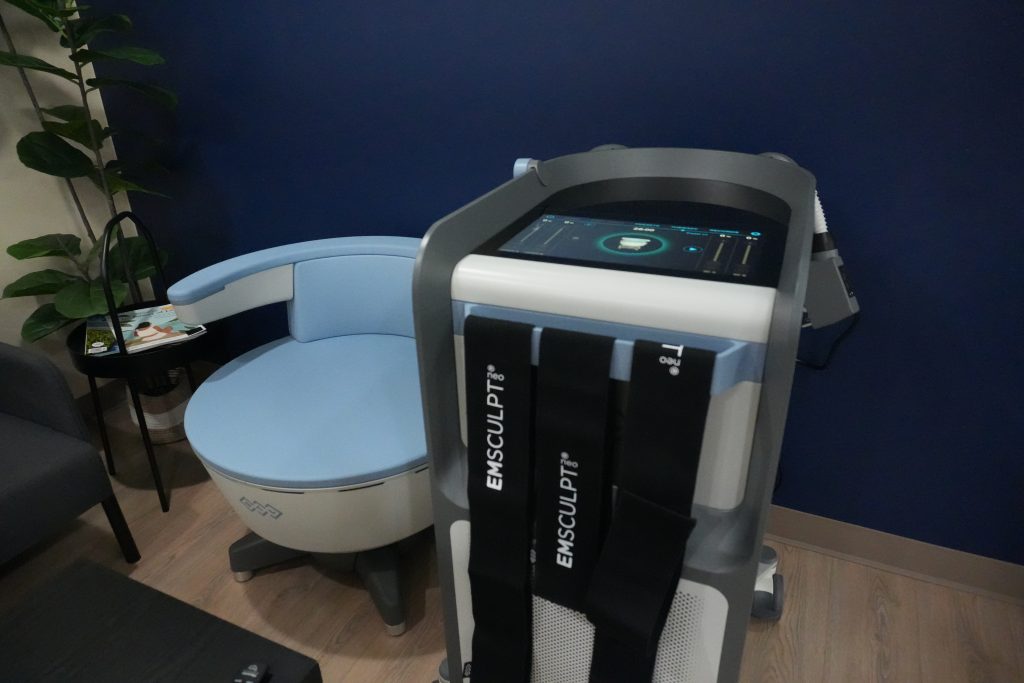
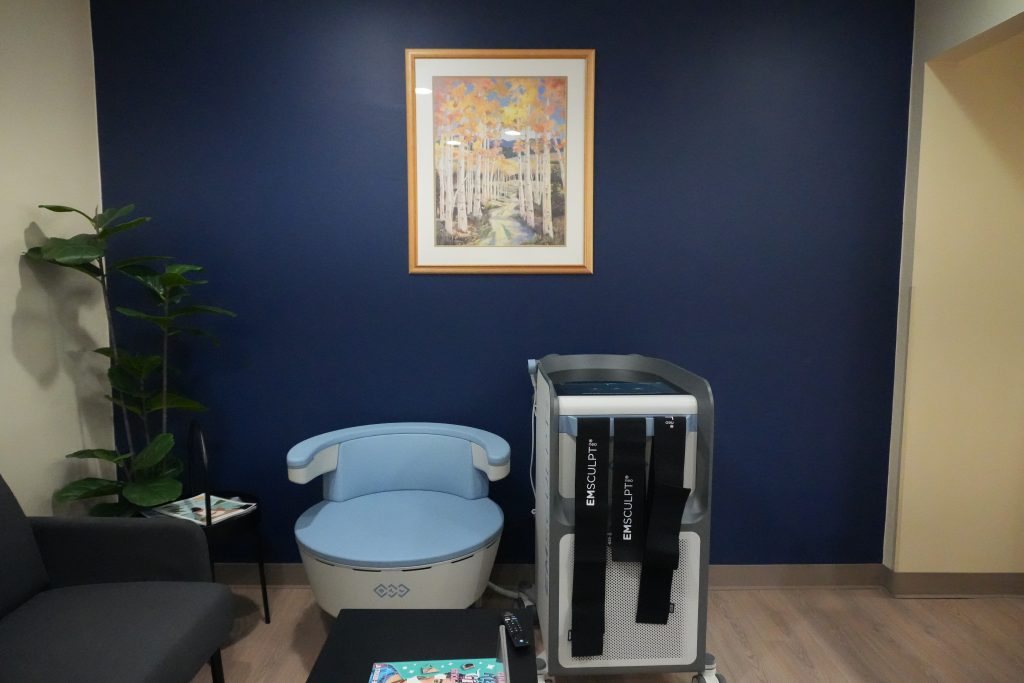
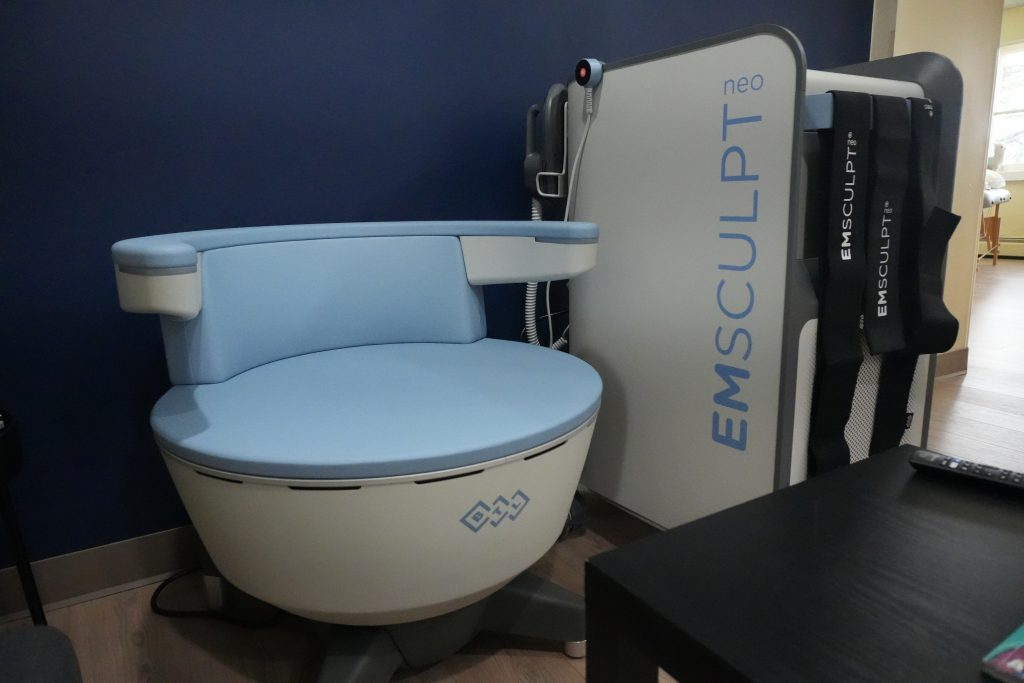
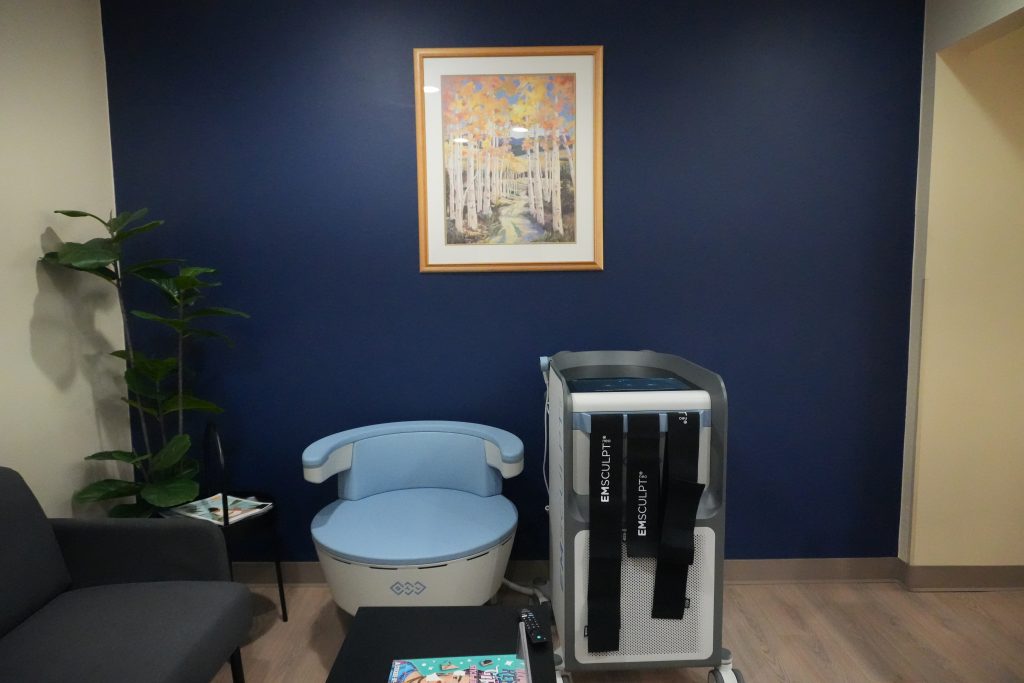
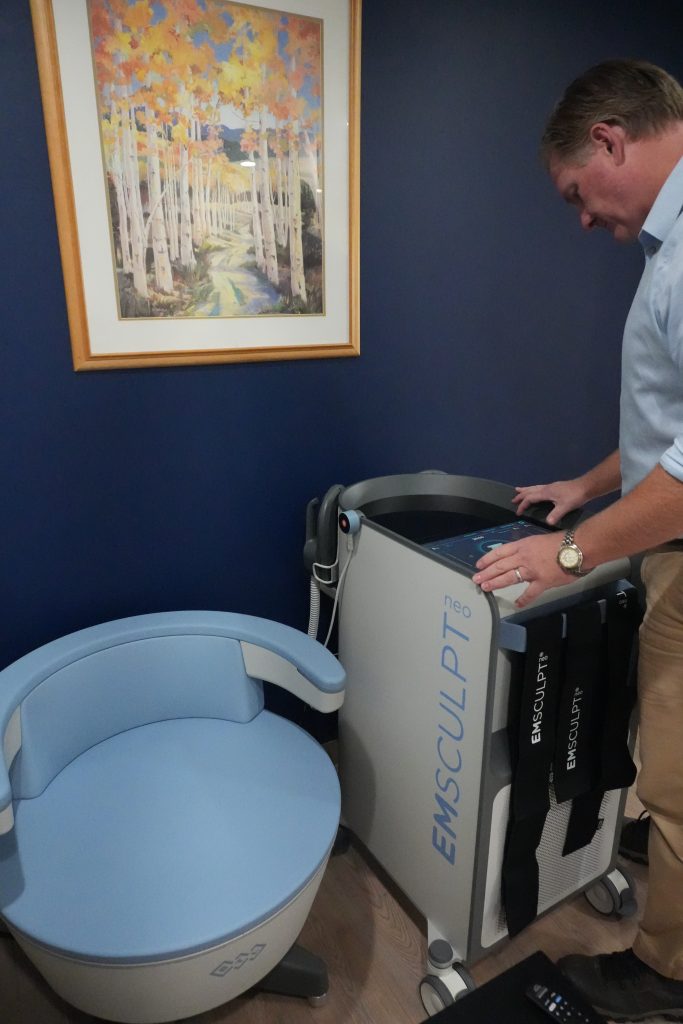
How it works: The Emsella chair, sometimes called a Kegel chair, uses focused electromagnetic energy to make your pelvic floor muscles contract and release, over and over, far more times than you could manage on your own with Kegel exercises.
What a session is like: You sit on the chair in your regular clothes. You will feel the muscles tighten and lift, then relax. You can read or simply rest until the session is done.
Afterward: There is no recovery time, so you can drive home and get on with your day. Some people notice mild muscle soreness, much like the day after a workout.
Who the Emsella chair may help
Women and men with stress, urge, or mixed leakage tied to a weak pelvic floor, plus anyone who wants to rebuild pelvic floor strength before leaks get worse.
After pregnancy and childbirth: Rebuild strength in muscles that were stretched during pregnancy and delivery, once you have been cleared after your postpartum recovery.
Around menopause: Lower estrogen can thin and weaken pelvic tissues. Strengthening helps support the bladder as your body changes.
After prostate surgery: Many men need help regaining bladder control. A stronger pelvic floor can support that recovery.
Active adults and runners: Leaking while running, jumping, or lifting is common. It is a sign your pelvic floor needs work, not something to push through.
When Kegels are not working: Many people are not sure they are doing Kegels correctly. The Emsella chair can help when exercises alone have not been enough or are hard for you to do.
Staying ahead of it: You do not have to wait for leaks to get worse. Strengthening now can help you keep your bladder control as you age.
Ready to try the Emsella chair?
Pick a time that works for you, or call the office and we will answer your questions.
Every plan starts with an evaluation.
Leaks have more than one cause, and some are simple to fix. Dr. Kroner gets the full picture first: when and how you leak, your medications, fluids, caffeine, and bowel habits, a urine test, and a focused exam when appropriate. Then your plan may include:
Emsella chair sessions in our Wheat Ridge office
Pelvic floor muscle training, with coaching on proper technique
Bladder training and scheduled bathroom trips for urgency
Changes to fluids, caffeine, and bowel habits
Review of medications that can make leaking worse, and prescription medication when it is clinically appropriate
Referral to pelvic floor physical therapy, urology, or urogynecology when that is the better path
Is the Emsella chair right for you?
Who should skip it: The chair is generally not used during pregnancy, or for people with a pacemaker or other implanted electronic device, or with metal implants near the pelvis such as a copper IUD or a hip replacement. Dr. Kroner screens for this before your first session.
What the research says: Controlled studies of magnetic pelvic floor stimulation have found that many people leak less and report better quality of life afterward. The studies are still fairly small, results vary from person to person, and guided pelvic floor exercise remains the usual first step. Think of the chair as one useful tool, not a guaranteed fix.
When to seek care promptly: If leaking comes with blood in your urine, pain or burning, fever, trouble emptying your bladder, or new back pain, leg weakness, or numbness, please be seen right away rather than waiting for a chair session.
Why Ridgeview
A doctor with time to listen.
Many people never bring up leaking with a doctor because the visit feels rushed or the topic feels awkward. Visits with Dr. Kroner are unhurried and one-on-one, so there is room to talk it through, find the cause, and choose a plan you are comfortable with. If the Emsella chair makes sense, it is right here in the office. If physical therapy, medication, or a specialist would serve you better, you will hear that too.
Understanding incontinence and pelvic floor weakness
Urinary incontinence is the accidental leakage of urine, also called loss of bladder control. It can be a few drops when you sneeze, or a sudden urge you cannot hold. Studies estimate that between a quarter and nearly half of women experience it, and men are affected too, especially after prostate surgery.
Your pelvic floor is a hammock of muscles at the base of your pelvis that supports your bladder and bowel. Pregnancy and childbirth, menopause, aging, chronic coughing, constipation, heavy lifting, extra body weight, and prostate surgery can all stretch or weaken it. Urgency can also come from caffeine, alcohol, infections, certain medications, diabetes, and nerve conditions, which is why an evaluation comes first.
Types of incontinence
- Stress: leaks with a cough, sneeze, laugh, lift, or jump
- Urge: a sudden, strong need to go and not making it in time
- Mixed: a combination of stress and urge symptoms
- Overflow: a bladder that does not empty fully and dribbles
- Functional: a physical limitation makes it hard to reach the bathroom in time
Related: Weight Management, Diabetes, Preventive Care
Common questions about the Emsella chair
What does the Emsella chair feel like?
Most people describe a strong tightening and lifting sensation, sometimes with tingling. It can feel unusual at first, but it should not be painful. You stay fully clothed the entire time.
How many Emsella sessions will I need?
It depends on the type of leakage or weakness and how long it has been going on. Dr. Kroner will recommend a schedule after your evaluation and check your progress along the way.
Can the Emsella chair help men?
It can. Most of the research in men involves leakage after prostate surgery. Those studies are small, but they suggest magnetic pelvic floor stimulation may help men regain control sooner than exercises alone, with similar results over the long term. An evaluation will show whether it fits your situation.
Is leaking urine just a normal part of aging or having children?
It is common, but it is not something you simply have to accept. Pregnancy, childbirth, menopause, and aging all make leaks more likely, and for most people it can be improved with treatment. The first step is finding out which type of incontinence you have.
Can I strengthen my pelvic floor if I am not leaking yet?
Yes. Strengthening can help after childbirth, around menopause, or if you are active and want to stay ahead of problems. Dr. Kroner can show you how to do pelvic floor exercises correctly and let you know whether Emsella sessions make sense for you.
Can I just do Kegel exercises at home?
Often, yes, and they are usually part of the plan. The hard part is doing them correctly and consistently, which is where coaching helps. The Emsella chair is an option when exercises alone have not been enough or are difficult for you to do.
Do I need surgery to fix incontinence?
Usually not as a first step. Most people start with non-surgical options such as pelvic floor strengthening, bladder training, habit changes, or medication. Surgery can be a good choice for some types of leakage, and Dr. Kroner will refer you to a urologist or urogynecologist if that is the better route.
What are the signs of a weak pelvic floor?
Leaking when you cough, sneeze, laugh, or exercise is the most common sign. Others include sudden urges, a feeling of heaviness or pressure in the pelvis, trouble holding gas, and needing to go more often. An evaluation can show whether a weak pelvic floor is part of the picture.
Where is Ridgeview, and what areas do you serve?
Ridgeview Direct Care is at 4045 Wadsworth Blvd Ste 300 in Wheat Ridge. We welcome patients from Arvada, Lakewood, Edgewater, Golden, Applewood, and across the west Denver metro.
Book your Emsella session
Book online with Dr. Kroner’s office and pick a time that works for you. Serving Wheat Ridge, Arvada, Lakewood, Edgewater, Golden, and the west Denver metro.
Visit Ridgeview Direct Care
Ridgeview Direct Care
Address: 4045 Wadsworth Blvd Ste 300, Wheat Ridge, CO 80033
Phone: 720-807-9961