
Concussion Management in Wheat Ridge, CO
A concussion is a brain injury, even when the hit looked minor and the athlete never lost consciousness. Getting the first days right, and returning to school and sport in the right order, matters more than how hard the knock was.
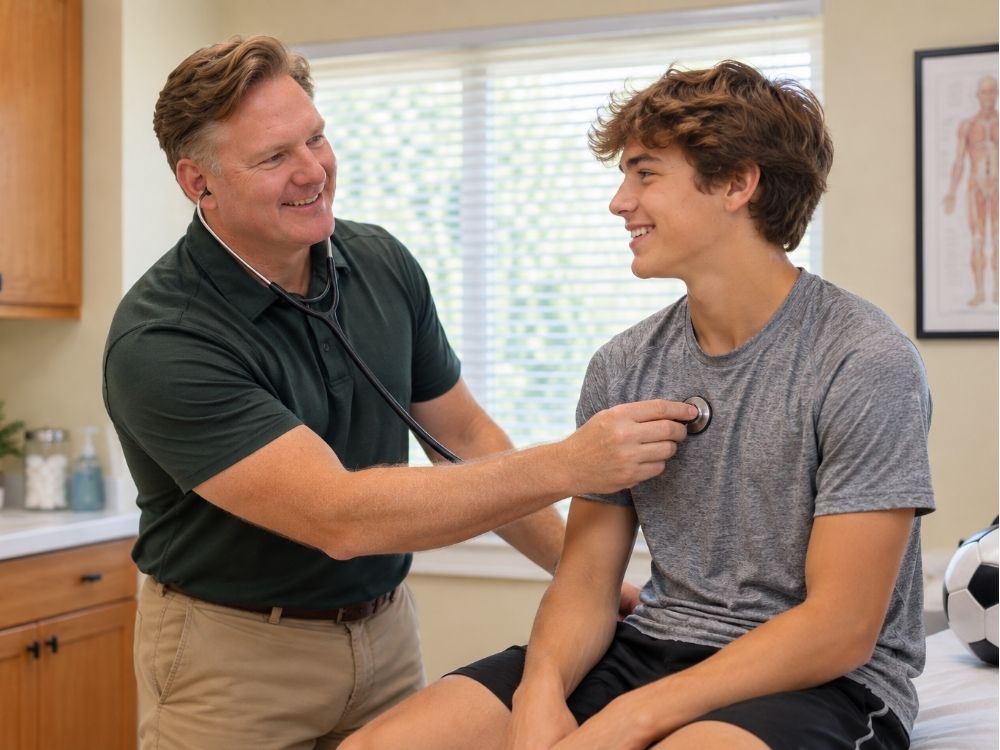
Dr. Christopher Kroner has spent 15 years as a high school sideline physician and has cared for college, Olympic and professional athletes, including as a team physician for the Anaheim Ducks. At Ridgeview Direct Care in Wheat Ridge, he evaluates concussions in student athletes, weekend athletes and adults hurt in falls, car accidents and everyday life.
Signs of a concussion
Symptoms can appear right away or over the next day or two. Common signs include:
- Headache or a feeling of pressure in the head
- Dizziness, balance problems or blurred vision
- Nausea or vomiting
- Sensitivity to light or noise
- Feeling foggy, slowed down or “not right”
- Trouble concentrating or remembering
- Irritability, sadness or being more emotional than usual
- Sleeping more or less than usual
Go to the emergency room or call 911 for a headache that gets worse and does not go away, repeated vomiting, seizures, slurred speech, weakness or numbness, one pupil larger than the other, increasing confusion, or difficulty waking up.
The first 48 hours
For the first day or two, the goal is relative rest: limit screens, schoolwork and anything that clearly makes symptoms worse, and get plenty of sleep. Complete darkness and total isolation are no longer recommended; light activity such as a short walk is usually fine as long as it does not worsen symptoms.
Avoid alcohol, and check with a doctor before taking anything beyond acetaminophen for a headache. Most important of all: no return to practice or games, even if the athlete says they feel fine.
How Dr. Kroner evaluates a concussion
A concussion visit at Ridgeview starts with how the injury happened and what has changed since. Dr. Kroner then checks symptoms with a standardized symptom scale, tests memory and concentration, and examines balance, eye movements and the neck, which is often injured at the same time.
Most concussions do not need a CT scan or MRI. Imaging is ordered when there are signs of a more serious injury, such as a worsening headache, focal weakness or a skull injury. You leave with a written plan for school or work, activity and follow-up.
Return to learn
For students, school comes before sport. Many students do best with a short break followed by a gradual return with temporary accommodations: shorter days, extra time on assignments, breaks from screens and postponed tests. Dr. Kroner can provide written recommendations for your school.
Return to play
Under Colorado’s Jake Snakenberg Youth Concussion Act, a young athlete suspected of having a concussion must be removed from play and cannot return until a qualified health care provider gives written clearance. Return happens step by step, usually with at least a day at each stage, and the athlete moves on only if symptoms stay away:
- Symptom-limited daily activity
- Light aerobic exercise such as walking or a stationary bike
- Sport-specific exercise without contact
- Non-contact training drills
- Full-contact practice after medical clearance
- Return to competition
If symptoms come back at any stage, the athlete drops back to the previous step. Dr. Kroner provides the written clearance once the progression is complete.
What parents should do
If you suspect a concussion, take your child out of play and keep them out for the rest of the day, even if they seem better. Watch them closely for the first 24 to 48 hours for the emergency warning signs above, and book an evaluation within a day or two. Our guide to concussion signs every Colorado parent should know covers what to look for in more detail.
Ridgeview cares for children and teens as well as adults, and also offers sports physicals that include concussion history screening.
Persistent symptoms
Most people recover within about two to four weeks. When symptoms last longer, Dr. Kroner looks for the drivers that can keep them going, such as neck injury, vision or balance problems, sleep disruption, headaches or mood changes, and coordinates referrals to vestibular therapy or other specialists when needed.
Concussion questions
Do I need a CT scan for a concussion?
Usually not. CT and MRI do not show a concussion itself. They are used when red-flag signs suggest bleeding or a skull fracture.
How long does a concussion last?
Most adults and teens recover within about two to four weeks. Children and teens can take a little longer, and a previous concussion can lengthen recovery.
Can concussion care happen without a membership?
Yes. Sports medicine visits, including concussion evaluations, are available to members and non-members. See sports medicine pricing.
Medically reviewed by Christopher Kroner, MD, MPH, primary care and sports medicine physician. This page is general information, not medical advice. For a medical emergency, call 911.
Worried about a concussion?
Book an evaluation with Dr. Kroner. Members and non-members are welcome, and you leave with a written plan for school, work and sport.
Visit Ridgeview Direct Care
Ridgeview Direct Care
Address: 4045 Wadsworth Blvd Ste 300, Wheat Ridge, CO 80033
Phone: 720-807-9961
Hours: Monday–Friday, 9:00 AM–5:00 PM, by appointment